Fitting a Leather Holster to Your Pistol: Bond Arms, Staccato & 1911

A good fit starts before the leather gets cut
You’ve found a holster you like. The leather looks right, the carry style suits you, and your firearm’s brand appears in the listing.
Before you choose the color and place the order, there’s one more thing to check: does it fit your exact pistol?
A Bond Arms derringer, a Staccato C2, and a 1911 each bring a different shape to the workbench. Even within those names, barrel lengths, frame features, and accessories can change what a holster needs to accommodate.
That’s where a properly fitted molded leather holster begins—with the details of the firearm it will carry.
At Busted B Leather, we build for firearms we own or have the mold for. Matching your pistol to the right design comes before everything else.
Bond Arms: the details matter on a small firearm
A Bond Arms pistol may be compact, but it still needs a holster that supports its weight, covers the trigger properly, and leaves the grip accessible.
The model and barrel length matter. “Bond Arms” alone doesn’t tell us enough to confirm a fit, and different models shouldn’t be treated as interchangeable simply because they share the same name on the frame.
Our Sidewinder cross-draw holsters for Bond Arms are one of the options available. The angled design offers a particular way to carry and reach the firearm, but choosing it still starts with checking the models and barrel lengths listed.
Think about where you intend to wear it, too. Handedness and cross-draw placement need to match the design you’re ordering. A holster should work with your intended carry position from the start.
If you’re unsure which Bond Arms model or barrel length you have, confirm those details before ordering. It’s easier to settle that question before the leather reaches the cutting table.
Staccato C2: leave room for the whole setup
With a Staccato C2, the conversation often turns to the red dot.
A mounted optic changes the space the holster needs to leave clear. The slide, optic, mounting arrangement, and any other accessories all belong in the compatibility discussion.
An optic-compatible holster needs to allow the supported setup to seat properly and clear the leather during removal. That doesn’t mean every holster needs the same cut—or that every red dot will work with every optic-ready design.
Start with the fit information in our Staccato C2 holster listings. If your pistol wears an optic, provide its exact make and model when asking us to confirm compatibility.
A weapon-mounted light needs its own confirmation. An optic cut doesn’t make a holster light-compatible, and adding a note to an order doesn’t change the pattern being used.
Before placing the order, make sure the complete setup is supported. We can only build the configurations available within our designs and tooling.
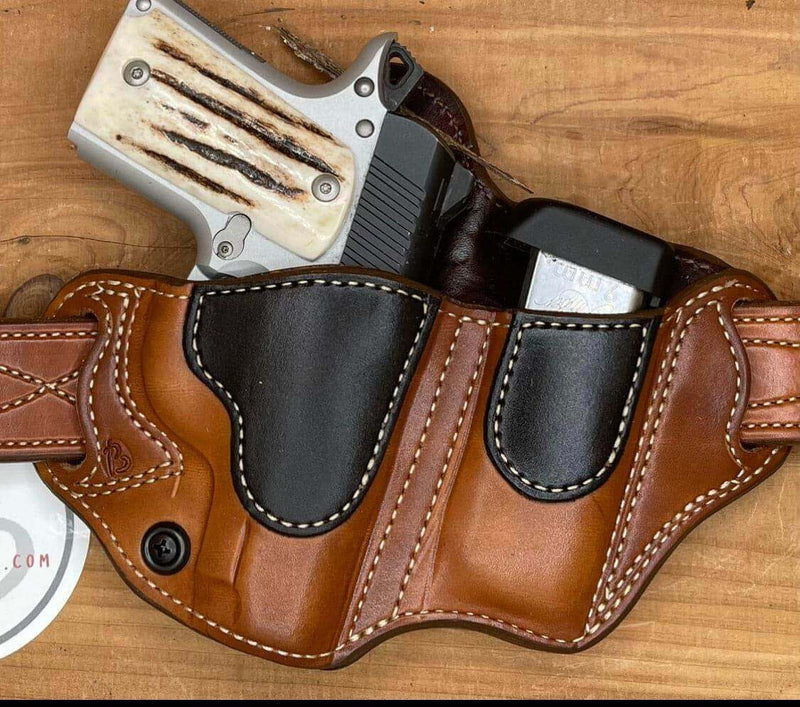
The 1911: a familiar name with plenty of variations
Few pistols look more at home in leather than a 1911.
But “a 1911 holster” still needs a closer look. A Government, Commander, or Officer-size pistol can bring different dimensions, and the manufacturer and exact model matter alongside barrel length.
Features such as an accessory rail, sights, safety controls, or an optic may affect compatibility. Two pistols can share the same general profile without fitting the same holster correctly.
Tell us what you actually own rather than choosing by appearance. The goal is a holster that accommodates the supported firearm, holds it securely, and allows access to the grip as intended.
The classic look comes from the finished leather. The fit comes from getting the details right.
Why barrel length belongs in the conversation
Barrel length helps identify the configuration a holster needs to accommodate, but it doesn’t tell the entire story by itself.
The frame, slide or barrel assembly, trigger guard, and other contact points also contribute to fit. Depending on the design, a holster may support more than one listed configuration—or be intended for one specific application.
That’s why the individual listing matters more than a broad rule about what should fit.
Don’t assume a shorter pistol will work correctly in a longer holster, or that two firearms with matching barrel lengths can share one. Use the compatibility information provided, and contact us if your exact configuration isn’t listed.
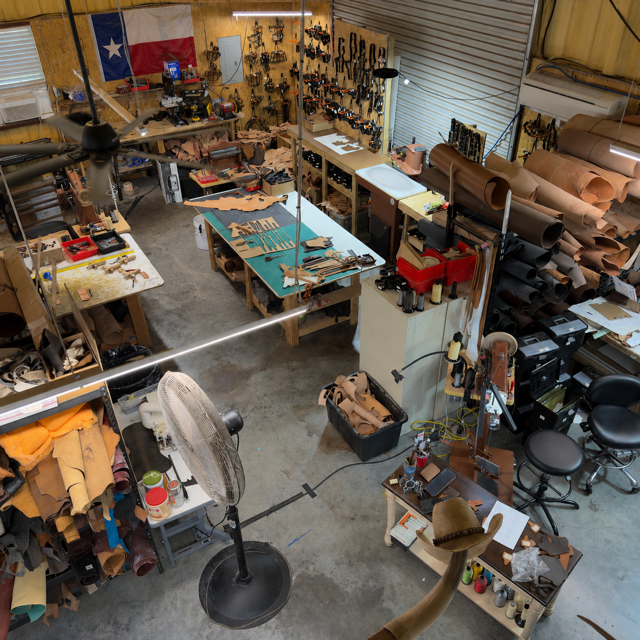
What happens at the molding bench
Once the correct design and firearm fit are established, the leather can be formed.
We use full-grain, vegetable-tanned Hermann Oak cowhide for our holsters. During wet molding, the dampened leather is worked around a firearm we own or a mold we have in the shop.
The shaping establishes the contours of the finished holster. Boning adds definition where appropriate to the design, while the pattern, construction, and any retention features work together to hold the firearm.
Some holsters have pronounced molded lines. Others have a smoother appearance. Either way, the important question is whether the design fits and functions as intended.
You can follow the process from cutting through finishing in how a leather holster is made.
Tell us about the pistol and the way you carry
When you contact us about fit, start with the firearm’s make, exact model, and barrel length. Include any optic, light, or other modification that could affect compatibility.
Then tell us your preferred carry style and handedness.
IWB, OWB, and cross-draw designs sit differently and offer different ways to carry. Within IWB, you may prefer strong-side, appendix, or small-of-back carry, depending on what the particular design supports.
Those preferences help us narrow down the available options. They don’t make every holster suitable for every position.
If you’re still deciding, our guide to choosing a leather holster for concealed carry can help you think through the clothing, comfort, and carry-position questions.
We only make holsters for firearms we own or have the mold for, and we do not accept customer firearms for fitting. If your model isn’t listed, contact us before ordering so we can confirm availability.
Choose the fit first, then make it yours
Once compatibility is confirmed, you can enjoy choosing the details: leather color, stitching, and the options offered for that holster.
Made to order means we build an established design with the selections available in its listing. It doesn’t mean every alteration, accessory combination, or design change can be accommodated.
That clarity helps us build what you’re expecting—and helps you choose a holster you’ll be pleased to put on your belt.
Shop our in-stock holsters for finished pieces that ship within 3–5 business days, or browse our made-to-order holsters to see the available builds and options. Check each listing for fit, compatibility, handedness, and current lead time.
Whether you carry a Bond Arms, Staccato C2, or 1911, the first step is the same: know the firearm, confirm the fit, and choose a design that suits your day.
The leather work follows from there.
Leave a comment