IWB vs. OWB: Which Leather Holster Carry Style Is Right for You?

Picture an ordinary day
You put on your holster in the morning, check how your shirt falls, and head out the door. Then comes the part that matters: living in it.
You climb into the truck. Sit at a desk. Bend down to pick something up. Spend an afternoon on your feet. Somewhere along the way, you find out whether that carry setup works with your day or keeps getting in the way.
That’s what choosing between an inside-the-waistband and outside-the-waistband leather holster comes down to. Concealment matters, but so does being able to sit comfortably, move naturally, and keep the holster stable.
Both styles have their place. The better choice is the one that fits your firearm, your clothing, and the way you spend your time.
Inside the waistband: keeping things close
An inside-the-waistband holster, usually called IWB, carries the holster and much of the firearm inside your pants, with the grip above the waistband.
IWB describes how the holster is worn, rather than one fixed position on your waist. Depending on the design, it can be worn at your side, toward the front in appendix carry, or at the small of your back, often called SOB carry.
That placement inside the waistband helps conceal the lower portion of the firearm. Your shirt still needs to cover the exposed grip and any visible hardware, but there’s less below the belt for it to hide.
For someone who normally wears an untucked shirt and wants discreet daily carry, IWB can be a practical starting point. You may be able to take off a jacket without changing how the firearm is concealed, provided the shirt underneath gives adequate coverage.
A tucked shirt takes more planning. Some IWB designs have tuckable attachments that leave room for a shirt to tuck between the holster and pants. Others don’t. An IWB holster isn’t automatically tuckable, so check the individual design rather than assuming it will work with office clothes.
The trade-off is space. The firearm and leather now share your waistband with you. Pants that fit comfortably without a holster may feel tight once it’s added, especially when you sit down.
There’s no universal rule about going up a particular number of sizes. The room you need depends on your firearm, holster, pants, and where you carry. What matters is having enough space to wear the setup without excessive pressure or restricted movement.
Outside the waistband: giving yourself more room
An outside-the-waistband holster, or OWB, carries the firearm outside your pants, supported by your belt.
For many people, that immediately feels more comfortable. There’s no holster taking up space inside the waistband, which can make a noticeable difference during a long workday or several hours behind the wheel.
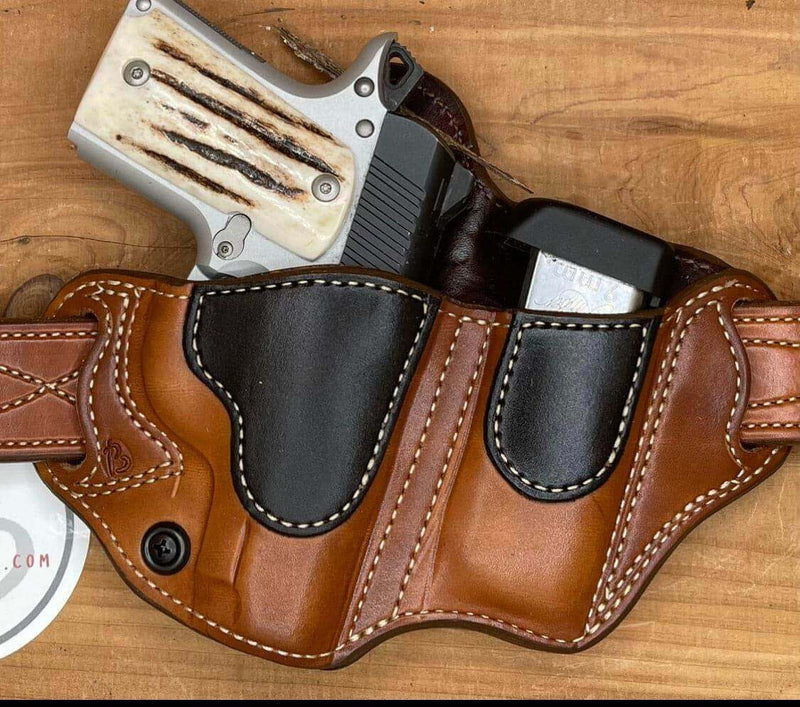
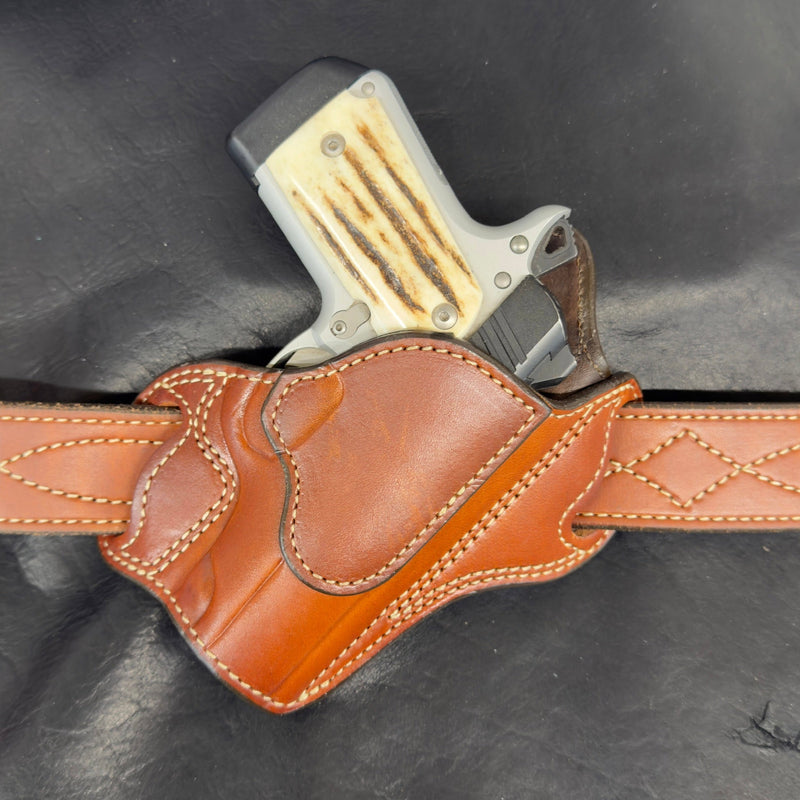
But OWB doesn’t always mean the firearm hangs away from your body. A well-designed pancake holster can ride close, with belt slots that help draw it inward. The holster’s shape, ride height, and attachment style all affect how it feels and how easily it conceals.
The biggest consideration is coverage. If you intend to conceal an OWB holster, your clothing has to cover the firearm and the holster below the belt.
Sometimes a loose, sufficiently long T-shirt does the job. Other times, an untucked overshirt, vest, or jacket works better. A shirt that covers everything while you’re standing still may ride up when you reach or bend, so it’s worth checking how your clothes behave through normal movement.
OWB gives you more room inside your pants. In return, it asks a little more of what you wear over them.
Your closet is part of the decision
It’s easy to choose a holster around the clothes you imagine wearing. It’s more useful to look at what you actually reach for each morning.
If your wardrobe is mostly untucked shirts and jeans with some room in the waist, IWB may fit naturally into your routine. If your pants already fit snugly, adding a holster inside them may be uncomfortable.
If you regularly wear relaxed shirts, flannels, or a vest, a close-riding OWB may be easier to conceal than you expect. If you prefer fitted tops or shorter shirts, covering it can become more difficult.
Work clothes deserve the same consideration. A tucked dress shirt calls for a setup designed to accommodate it. Outdoor work may put greater emphasis on secure attachment, freedom of movement, and protection from dirt and moisture.
Summer doesn’t give everyone the same answer, either. IWB puts more of the holster inside the waistband, where sweat can be a consideration. OWB leaves more room inside your pants but may require a longer or looser covering shirt.
The best choice is the one that works with the clothes you’ll keep wearing.
Where you wear it changes how it feels
Choosing IWB is only part of the decision. Where it sits on your waist can make just as much difference.
Strong-side carry places the holster near your dominant-hand side. Appendix carry brings it toward the front of your waistband. Small-of-back carry places it behind you. Each position changes where the grip rests, how your shirt falls, and what you feel when you sit or move.
A setup that feels comfortable while standing may feel different against a truck seat or office chair. Small-of-back carry, in particular, puts the firearm between your lower back and the seat, making time spent sitting an important consideration.
Height, torso length, waist shape, and the way your pants sit all play a part. So do the size of the firearm and the holster’s angle and ride height.
That’s why broad rules about lean people needing IWB or larger people needing OWB don’t tell the whole story. Two people with similar builds can prefer very different setups.
Choose a holster designed for your intended carry position. Not every IWB design is suitable for strong-side, appendix, and small-of-back carry, and moving a holster around your waist doesn’t automatically make it appropriate for every position.
Leather will settle in with use, but break-in shouldn’t be treated as a cure for a setup that’s fundamentally wrong for you. A holster that causes persistent pain, interferes with normal movement, or won’t stay secure needs attention.
If you’re unsure where to begin, tell us what firearm you carry, where you prefer to wear it, and what tends to bother you about your current setup. Those details are more useful than a number on a size chart.
The belt deserves just as much thought
A good holster needs a stable foundation.
With OWB, the belt supports the holster outside the waistband and helps keep it from tipping or moving around. With IWB, it works with the waistband and attachment hardware to keep the holster positioned.
A belt that rolls or sags can make either style frustrating. You may find yourself tightening it excessively or repeatedly adjusting a holster that never feels settled.
A proper leather carry belt helps support the weight and keep the setup consistent. Check that the belt width and thickness work with the holster’s loops or clips, too. Good individual pieces still need to fit together.
It’s worth treating the belt and holster as one purchase decision, even if you buy them separately.
What about the draw?
OWB often leaves more room around the grip, while IWB places the firearm closer to the body and waistband. Your carry position also affects access, whether you wear IWB at your side, in the appendix position, or at the small of your back.
None of those choices comes with a guaranteed draw time. Clothing, retention features, mobility, and practice all matter. A jacket can complicate access to an OWB just as a shirt can complicate access to an IWB.
Choose a holster that securely holds your exact firearm, properly covers the trigger, and stays attached as intended. Then learn to use that setup with qualified instruction. Reholstering deserves deliberate attention regardless of where the holster sits.
You may find a place for both
Some people settle on one style and wear it year-round. Others keep both because their days don’t all look alike.
An IWB might work well with one outfit, while an OWB feels better for a long day in different clothes. Changing firearms, seasons, or routines can also change what you prefer.
That doesn’t mean you need to buy two holsters immediately. Start with the situation you encounter most often and choose for that.
Don’t assume one holster can switch between IWB and OWB, either. Some designs are specifically built to convert, but most should be used only in their intended configuration. Follow the listing and the maker’s instructions.
Shoulder carry belongs in its own category. It supports the firearm from a shoulder harness rather than the waistband and brings its own considerations for fit, concealment, and handling. If that sounds closer to what you need, explore our shoulder holster selection.
Finding your everyday fit
If concealment is your main concern and you have room inside your waistband, IWB is worth considering. From there, you can consider whether strong-side, appendix, or small-of-back carry suits your routine and the holster you’re choosing.
If waistband pressure is what bothers you most and your clothing provides enough coverage, a close-riding OWB may suit you better.
Neither choice has to win every situation. It needs to work well for yours.
At Busted B Leather, we build for firearms we own or have the mold for, using established holster designs and the options offered in each listing. If your firearm isn’t listed, contact us before ordering so we can confirm availability.
You can shop our in-stock holsters for finished pieces that ship within 3–5 business days, or browse our made-to-order holsters to choose from the available configurations. Check each listing for fit, compatibility, and current lead time.
If you’re still deciding, contact us with your firearm model, preferred carry position, and a little about your daily routine. We’ll help you narrow down the options.
The right holster should earn its place on your belt by working with your day—from getting dressed in the morning to taking it off at night.
Leave a comment