5 Leather Myths a Shop With 35 Years of Experience Wants You to Stop Believing

Some stories stick around longer than they should
Spend enough time working with leather, and you start hearing the same things.
Someone worries that a little rain has ruined a holster. Someone else holds up a product labeled “genuine leather” and assumes those two words explain its quality. Then there’s the customer who finds green marks beneath a row of cartridge loops and wonders whether something has gone wrong with the hide.
The questions are fair. Leather gets sold with plenty of impressive language and surprisingly little explanation.
At Busted B Leather, we’ve got more than 35 years of leathercraft experience behind what we build. We’ve seen how leather behaves on the cutting table, during molding, and after years of daily use. Here are five leather myths worth leaving behind.
Myth 1: “If leather gets wet, it’s ruined”
If water automatically ruined leather, a lot of leatherwork would never happen.
Controlled moisture is part of working vegetable-tanned leather. Before stamping, the leather is dampened so it takes an impression. During wet molding, moisture lets us form a holster around a firearm we own or a mold we have in the shop.
Water has a purpose at the bench. That doesn’t mean every finished leather item should be dunked in the sink.
The leather, finish, construction, and amount of exposure all matter. Getting caught in a shower isn’t the same as leaving a holster soaking wet, and a treatment suitable for one piece may be wrong for another.
If your gear gets damp, let it dry naturally at room temperature, away from direct heat. Don’t reach for a hair dryer, set it on a heater, or put it in the microwave. Trying to hurry the process can leave you with a much bigger problem than the original moisture.
If a wallet has stretched or a holster’s retention has changed, contact us before trying to shrink or reshape it. We can help determine what the piece needs. Our leather care guide covers routine care.
A little water isn’t automatically the end of good leather. How you handle it afterward matters.
Myth 2: “‘Genuine leather’ tells you how good it is”
Those words sound reassuring. They tell you far less than most people think.
“Genuine leather” is not a universal quality grade. It doesn’t, by itself, tell you whether a piece is full-grain, how it was tanned, how it was finished, or how well the finished product was built.
It also doesn’t automatically mean poor leather. We offer Genuine Water Buffalo, and we use that name to identify the hide—not to place it on an imaginary grading ladder.
Better questions get you better information. What animal did the hide come from? Is it full-grain? How was it tanned? Where appropriate, can the maker identify the tannery? Why was that leather chosen for the job?
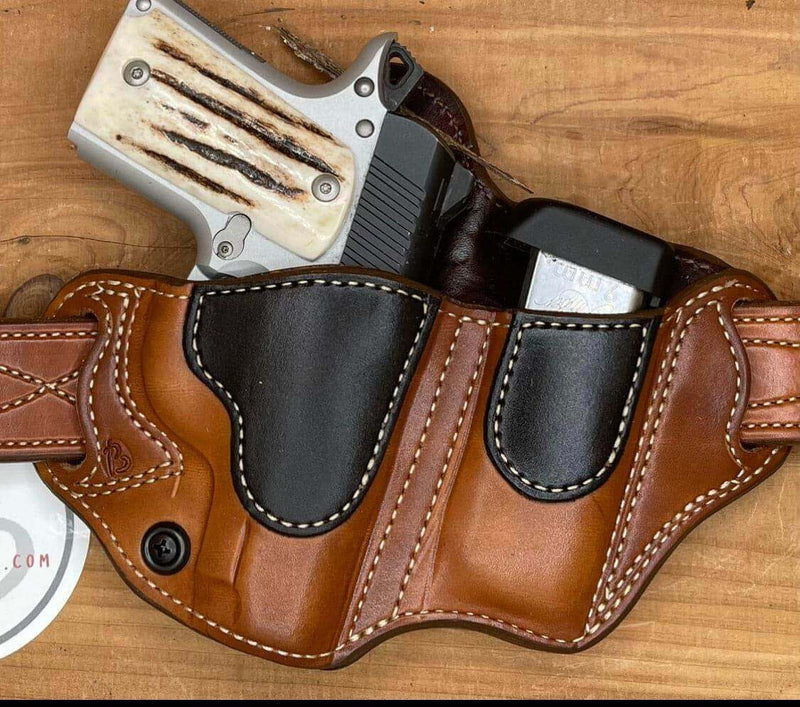
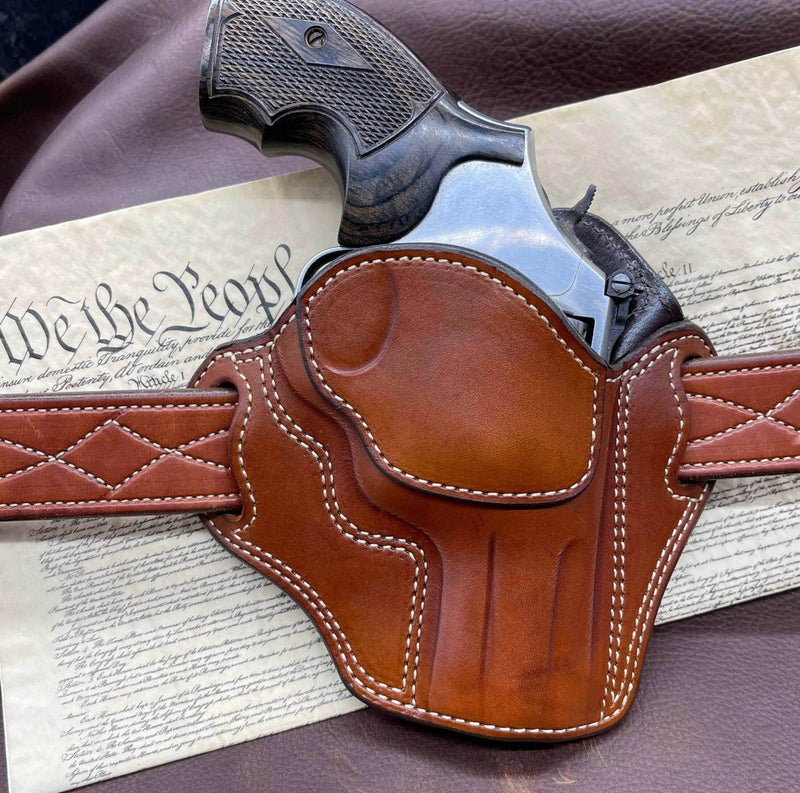
For our holsters, belts, and sheaths, we use full-grain, vegetable-tanned Hermann Oak cowhide. It gives us the structure and working properties those pieces need. Genuine Water Buffalo, offered on select products, brings a different grain, texture, and character.
Even good hides need inspection. Natural marks and variations are part of leather, and choosing where to cut each component is part of the work.
Look for a maker who can explain the material beyond the wording on a tag. Our guide to reading a holster listing takes that conversation further.
Myth 3: “Green marks mean the leather has gone bad”
You put cartridges into the loops on your sling or butt cover, put the rifle away, and come back later to find green marks around the brass.
It’s understandable to wonder what happened. But that green residue doesn’t automatically mean the leather is rotting or defective.
Copper-containing metals, including brass cartridge cases, can develop green corrosion commonly called verdigris. Moisture and prolonged contact with leather can contribute to the reaction. Leave cartridges sitting in leather loops for an extended period, and you may find residue on the cases, the leather, or both.
The simplest habit is to remove cartridges before long-term storage. Give the loops a chance to stay clean and dry rather than using them as permanent ammunition storage.
If residue appears, remove the ammunition and ask us about cleaning the leather. Don’t assume a cleaner intended for metal belongs on the hide, and don’t apply leather treatments to ammunition. Corroded cartridges need to be assessed according to the ammunition manufacturer’s guidance.
Our rifle slings and butt covers put cartridges within reach while you’re using them. Emptying the loops afterward is a small habit that helps keep both the leather and ammunition in better condition.
You’ll find more about loop fit and care in our complete guide to leather rifle slings.
Myth 4: “Handmade means no machines”
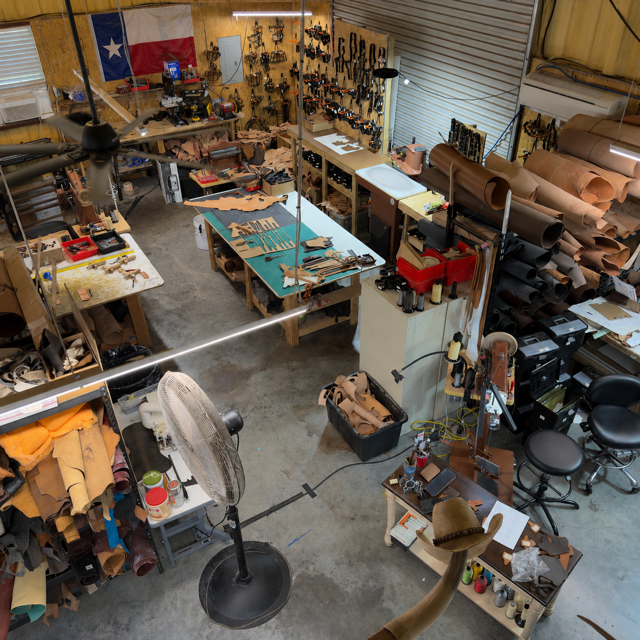
Walk into our shop and you’ll see machines. We’re happy to tell you what they do.
A clicker press and steel cutting dies help us cut established patterns consistently. COBRA industrial leather stitchers from Leather Machine Co. handle the substantial layers in our builds. A sander helps shape the edges before the finishing work continues by hand.
None of those tools chooses the right section of hide or decides whether a finished piece is ready to leave.
People inspect the leather, position the dies, prepare the lining, guide the stitching, mold the holster, work the boning, and finish the edges. The equipment is part of the process, and knowing how to use it is part of the craft.
There are leatherworkers who cut and stitch entirely by hand, and that work deserves respect. Using industrial equipment doesn’t erase the judgment and handwork in a piece, either.
What matters is describing the work honestly. Hand-stamped and hand-tooled aren’t interchangeable terms. Neither are handmade and hand-stitched. A maker should be able to tell you how a piece was built without dressing the process up as something else.
Everything we build is cut, made, and shipped from Lone Oak, Texas. You can follow the work in how a leather holster is made, or read more about the shop in our story.
Myth 5: “Leather wears out, so there’s no point buying better”
All leather can wear. Quality leather isn’t indestructible, and a good maker shouldn’t need to pretend otherwise.
But there’s a meaningful difference between a piece aging through use and one failing early because the material or construction wasn’t suited to the job.
A well-built belt may develop creases, darken, and pick up marks while continuing to support what you carry. A holster may develop a patina and become more familiar against your body while maintaining its shape and function.
Those changes aren’t the same as failed stitching, damaged attachments, or leather that has become too soft to do its job.
We’ve seen a belt from this bench come back after 15 years of daily wear with plenty of service left in it. That’s the kind of longevity we work toward. It comes from the leather, the construction, the way the piece is used, and the care it receives over time.
Backstitching, finishing thread ends, seating the stitches, and working the edges all take time. So does checking the finished piece. Those details belong in the price, even when they’re harder to see than the color or decorative work.
We stand behind manufacturer defects for as long as you own the piece, unless it has been altered. Normal wear still deserves attention, especially on a holster. If its condition or retention changes, contact us rather than assuming it’s either ruined or safe to keep using.
Good leather can give you years of service. Looking after it is part of getting those years.
Ask better questions, buy better leather
You don’t need to become a leatherworker to recognize a well-made piece. You just need more information than a catchy label or an old rule repeated often enough to sound true.
Ask what the leather is, why it was chosen, how the piece was built, and what care the maker recommends. Look at the seams and edges. Check that the product fits the job you’re buying it to do.
And when something changes after years of use, ask before trying a fix you found online. A little guidance can help you avoid turning a manageable issue into permanent damage.
Around here, our business card puts our approach plainly: “Cool Shit Ain’t Cheap & Cheap Shit Ain’t Cool.”
If you’re ready for leather gear with some honest work behind it, shop our in-stock holsters for finished pieces that ship within 3–5 business days, or browse our made-to-order holsters to choose from the available options. Check each listing for fit, compatibility, and current lead time.
The more you understand the leather you carry, the easier it is to appreciate what went into it—and keep it working for years to come.
Leave a comment