Kydex vs Leather Holsters: An Honest Comparison From a Leather-Only Shop

You’ll notice the difference by the end of the day
A holster can look perfectly good sitting on a table. Put it on, spend the day driving, walking, working, and sitting, and you start learning things the product photo couldn’t tell you.
You notice the edge pressing against your side. Whether the holster shifts on your belt. How securely it holds your firearm, and whether carrying it feels natural or becomes something you keep adjusting.
That’s where the Kydex vs leather holster conversation gets interesting. Both materials can make a good holster. Both can make a disappointing one, too. The material matters, but so do the pattern, construction, fit, and the way you actually carry.
We’re a leather-only shop, so our preference isn’t a secret. After more than 35 years of leathercraft experience, we believe a well-made molded leather holster earns its place on your belt. But an honest comparison means giving Kydex credit where it deserves it.
Why so many people choose Kydex
Pick up a Kydex holster and its appeal is easy to understand. The thermoplastic is heated and formed around a firearm mold, creating a rigid shell that holds its shape. Many designs give you a distinct click as the firearm seats, along with adjustable retention.
That rigid opening is useful during repeated range practice. It stays open when the firearm is drawn, making reholstering more straightforward. That doesn’t make reholstering something to rush or do blindly; it simply means there’s a firm opening waiting when you’re ready.
Kydex also makes sense when sweat and water are regular parts of your day. The shell doesn’t absorb moisture the way leather does, and it’s easy to wipe clean. You still need to care for the firearm and check the holster’s hardware, but the shell itself asks relatively little of you.
Then there’s the price. Production Kydex often offers a lower entry cost than a handmade leather build. For someone buying a first holster or working within a tight budget, that matters.
Those are practical advantages. We don’t have to build with Kydex to recognize them.
Why we keep coming back to leather
Leather’s appeal becomes clearer once you start wearing it.
A properly built leather holster begins with enough structure to hold the firearm securely. Over time, it settles against your body and becomes more familiar, much like a good leather belt or a pair of boots. It should break in without becoming limp or losing the shape that makes it work.
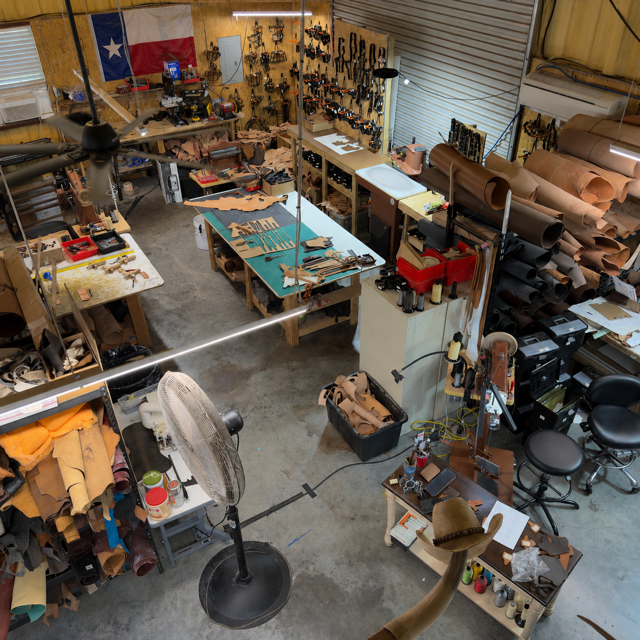
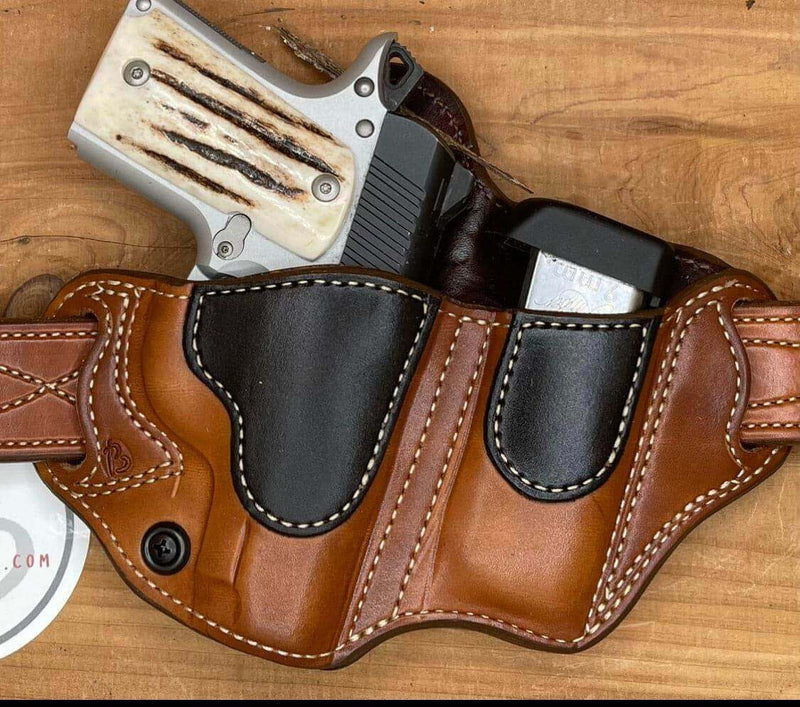
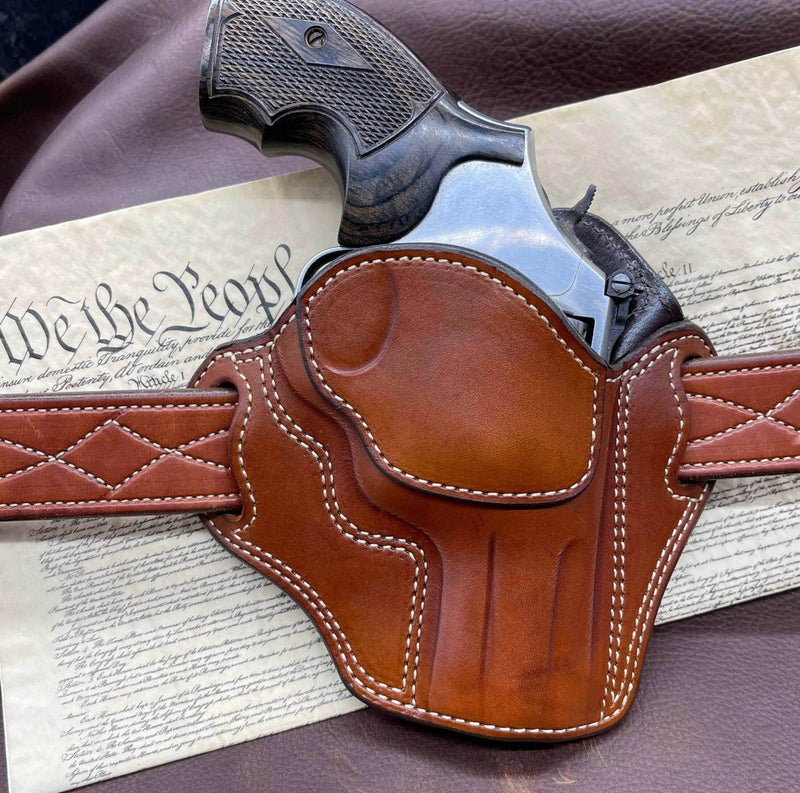
At Busted B Leather, we start with full-grain, vegetable-tanned Hermann Oak cowhide. The pieces are cut, lined with smooth leather, glued, stitched, and molded around the actual firearm or an appropriate firearm mold. Hand-boning defines the shape, and the edges are worked until the layers feel like one finished piece.
You may not notice every one of those steps when you first look at a holster. You’ll notice their results when a finished edge rests against your side or the firearm draws smoothly from its molded fit.
Leather also brings a quieter draw and a surface that develops character with use. The marks and patina become part of the piece. For people who appreciate leather, that’s part of what makes carrying it enjoyable.
If you’re still deciding how you want to carry, our IWB vs OWB leather holster breakdown is a good place to start. Comfort depends on carry position and design as much as material.
Fit belongs at the center of the conversation
Good fit isn’t exclusive to leather. A well-made Kydex holster is shaped for a specific firearm, too.
What matters is choosing a holster made for your exact model and configuration. Barrel length, sights, optics, and other features can affect compatibility. “Close enough” isn’t a sound basis for choosing something responsible for holding your firearm.
We build around the firearms and molds we have available. If your model isn’t listed, contact us before ordering so we can confirm whether we can make it. Our made-to-order options let you choose from the designs and features offered in the listing; they don’t mean every design change is available.
Depending on the holster, retention may come from the molded fit, a retention screw, a strap-and-snap, a button stud, or a thumb break. The right arrangement depends on the design and its intended use.
For a closer look at those choices, read our guide to choosing a leather holster for concealed carry.
Living with the holster you choose
Neither material gives you permission to forget about maintenance.
With Kydex, check the shell for cracks and inspect screws, clips, and mounting points. A loose screw or worn clip doesn’t automatically mean the entire holster is finished; many manufacturers offer replacement hardware and adjustment instructions.
Leather needs a different kind of attention. Keep it clean, let it dry naturally if it gets damp, and follow the maker’s care instructions. More conditioner isn’t always better, especially when the holster depends on firm leather to maintain its shape.
If a leather holster’s retention changes, the next step is to contact its maker. Depending on its construction and condition, the fit may be serviceable. That’s different from assuming every loose holster can be fixed with the same treatment. Before wetting, reshaping, or applying a product to one of ours, ask us. Our leather care guide covers routine care.
The firearm needs attention, too. Sweat and trapped moisture can contribute to corrosion regardless of which material you choose. Remove the firearm after a hot, sweaty day, inspect it, and care for it according to its manufacturer’s instructions. A carry holster shouldn’t become long-term storage.
And despite what you may hear, neither leather nor Kydex guarantees a wear-free finish. Repeated contact can leave marks, and grit inside either holster can make matters worse. Keeping the interior clean is part of protecting what you carry.
What does a good holster really cost?
The first price you see is only part of the expense.
A cheaper holster stops feeling like a bargain if you leave it in a drawer because it’s uncomfortable. The same goes for an expensive one that doesn’t suit your firearm, belt, or carry position.
Instead of assuming you’ll replace a budget holster every few months—or that any premium holster will last forever—think about what you’re buying. Look at the construction, the fit, the service available, and whether you’ll actually want to wear it.
Don’t leave the belt out of that decision. A proper carry belt supports the weight and helps keep the holster stable. Even a well-made holster can be frustrating on a belt that rolls, sags, or lets it move around.
We build leather gear for long service, and we stand behind manufacturer defects for as long as you own the piece, unless it’s been altered. That doesn’t mean leather never wears. It means workmanship and service matter after the sale.
There’s a reason our business card says, “Cool Shit Ain’t Cheap & Cheap Shit Ain’t Cool.” Good materials, careful construction, and the time to finish a piece properly all go into the price.
So which one would we choose?
For our own everyday carry, leather.
We like the molded fit, the quieter draw, the finished edges, and the way a good piece becomes familiar with use. We like building something that can develop character alongside the person carrying it. That’s why leather is what leaves our shop.
Someone spending long days in wet conditions or doing frequent range repetitions may prefer Kydex. Someone who values leather’s feel, appearance, and comfort may find a well-made leather holster worth the investment.
The useful question is how the finished holster works for your firearm and your day. Does it hold securely? Cover the trigger properly? Stay stable on your belt? Remain comfortable enough that you’ll consistently wear it?
Those answers matter more than winning an argument about plastic and leather.
If molded leather sounds like your kind of carry, shop our in-stock holsters for pieces ready to ship within 3–5 business days, or browse our made-to-order holsters to choose from the leather, finish, and options available for your firearm.
Check each listing for fit and compatibility, available options, and current lead time. If you need help choosing, contact us before ordering.
We’ll help you find a piece that fits your firearm—and feels right on your belt.
Leave a comment