Custom vs. Factory Holsters: Why Handmade Wins

Two holsters, two different experiences
You can put two leather holsters beside each other and see much of the same thing: leather, stitching, a place for the firearm, and a way to attach it to your belt.
The differences become clearer when you pick them up.
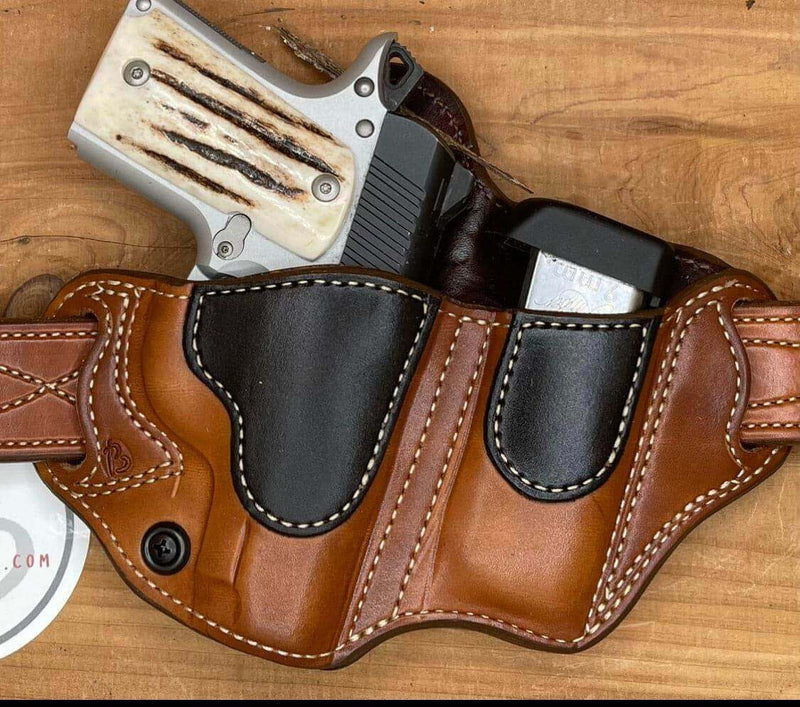
One has an edge that feels smooth beneath your finger. The lining meets the outer leather cleanly. The stitching follows the shape without wandering. Look inside, and the fit has been formed for the firearm the holster is intended to carry.
Those details take work. They also help explain why two products with the same name can feel so different after a full day on your belt.
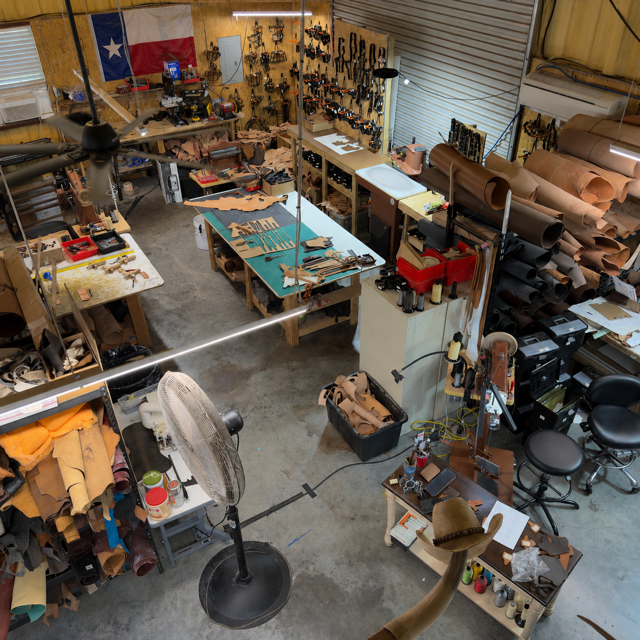
At Busted B Leather, we believe handmade earns its price through that work. More than 35 years of leathercraft experience goes into what we build in Lone Oak, Texas, from choosing the hide to checking the finished piece.
Start with fit, rather than the label
“Factory” doesn’t automatically mean poorly made, and “handmade” doesn’t automatically mean good. A production holster can be designed for a specific firearm, just as a handmade one can fall short if the pattern or construction is wrong.
What matters is what you’re actually buying.
A broadly sized pouch and a holster molded for a supported firearm are different products. If a listing says “fits most,” look closely at which models it supports, how it holds them, and whether it properly covers the trigger.
Our holsters begin with established patterns and confirmed compatibility. We only make holsters for firearms we own or have the mold for. We do not accept customer firearms for fitting.
During wet molding, the leather is formed around that firearm or mold. Boning adds definition where appropriate, while the pattern, construction, and retention features work together to establish the fit.
If your firearm isn’t listed, contact us before ordering. The make, exact model, barrel length, and any optic or light all belong in that conversation.
You can explore our made-to-order OWB holsters, but choosing where to carry is its own decision. Our IWB vs OWB comparison and concealed-carry holster guide can help you narrow that down.
The stitching is worth a closer look
A stitch line is one of the first things we look at when we pick up a leather piece.
Does it follow the edge consistently? Are the ends secured? Does the seam look finished, or does it look as though someone stopped as soon as the pieces were joined?
We stitch our holsters on COBRA industrial leather stitchers from Leather Machine Co. They handle the substantial leather layers in our builds while the person at the stitcher guides the piece and watches the seam.
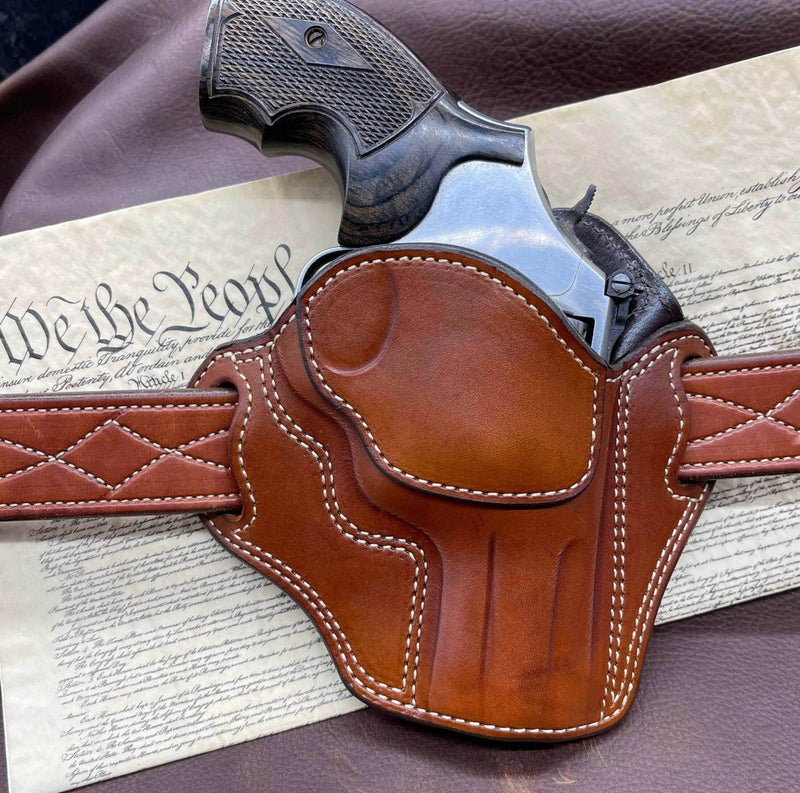
The work continues after stitching. Seams are backstitched to secure the ends, thread tails are trimmed and heat-finished where appropriate, and the stitch lines are hammered to help seat the thread and flatten the seam.
Each step adds time. Together, they contribute to a cleaner, more carefully finished piece.
Hand stitching can produce excellent work, too. The question is whether the method was carried out well and suits the product being made. We’re comfortable explaining our process because the workmanship should stand on its own.
Good edges don’t happen by accident
Run your finger along the edge of a finished holster. You’ll learn something about the time spent on it.
Our holsters combine outer leather, smooth leather lining, and any additional components required by the design. Bringing those layers together neatly takes preparation, accurate cutting, adhesive, stitching, and finishing.
The edges are sanded flush, shaped, burnished, and painted as the build requires. The goal is a smooth, even surface that feels like one finished piece.
It’s a detail you might miss in a distant photograph. Against your side, or in your hand every morning, it becomes easier to appreciate.
Close-up photos of the edges, lining, and seams can tell you more than a decorative stamp on the front. When you’re comparing holsters, look for those views—or ask to see them.
Know what’s underneath the finish
Color and decoration catch the eye first, but the leather underneath has a job to do.
We use full-grain, vegetable-tanned Hermann Oak cowhide for our holsters. It provides the structure and working qualities we need for cutting, forming, stitching, and finishing our designs.
Naming the leather helps explain the build. It gives you more information than a general claim about “premium quality.”
The phrase “genuine leather” alone isn’t a universal quality grade. It doesn’t identify the hide’s construction, tanning method, or suitability for a holster. It also doesn’t automatically mean the leather is poor.
Ask what the material is and why the maker chose it. Then look at what they’ve done with it.
A good hide is a starting point. The finished holster still depends on the pattern and workmanship.
What made to order means here
When you order from our made-to-order collection, you choose an established holster design and the options offered in its listing.
Depending on the model, those selections may include leather color, stitching, handedness, and retention features. They let you choose a build that suits your firearm and preferences.
They don’t mean every design change or accessory combination can be accommodated. A note on an order doesn’t change the mold, pattern, or intended carry position.
That’s why we encourage questions before ordering. Confirming the fit and options up front helps us build what you’re expecting.
Once the order reaches the bench, it moves through the work required for that design. Cutting, lining, stitching, molding, drying, and finishing all have their place in the process.
Check the individual listing for the current lead time. If you need something sooner, our in-stock holsters are already built and ship within 3–5 business days. You still get our workmanship; you’re choosing from finished pieces rather than selecting a new build.
The price makes more sense when you see the work
A lower-priced holster may suit someone’s budget and needs. A higher-priced one still needs to justify its cost.
Look at the leather, fit, construction, finishing, and service behind the sale. Consider whether the holster works with your firearm, your belt, and your daily routine.
A holster isn’t a bargain if it stays in a drawer because you dislike wearing it. Replacing disappointing gear adds up, but there’s no honest formula saying every inexpensive holster fails after six months or every handmade one lasts forever.
We build for long service. We’ve seen leather from this bench remain useful through many years of regular wear, and that’s the standard we work toward.
Our business card puts our approach plainly: “Cool Shit Ain’t Cheap & Cheap Shit Ain’t Cool.”
The materials cost money. The equipment costs money. So does the time spent doing the less visible work that helps a piece feel finished.
Service matters after the sale
A holster’s story doesn’t end when the package arrives.
Leather sees sweat, dust, movement, and repeated use. It needs routine care and inspection, just like the rest of your carry gear.
We stand behind manufacturer defects for as long as you own the piece, unless it has been altered. If stitching, hardware, or another part of the build develops a problem, contact us so we can assess it and arrange the appropriate next step.
Normal wear and damage need their own assessment. So does a change in retention. Don’t assume a loose holster is either beyond help or safe to keep using.
Before soaking, stretching, reshaping, or treating one of our holsters, ask us. Our leather care guide covers everyday cleaning, drying, and storage.
Looking after a well-made piece is part of getting the service it was built to give.
Choose the workmanship you want to wear
When you compare holsters, take your time with the details.
Confirm the firearm fit. Look at the lining and attachments. Examine the stitching and edges. Check the available retention features and the maker’s service policy.
Pair it with a proper leather carry belt that fits the holster’s loops or clips. Even a carefully made holster needs stable support.
For us, handmade wins when the finished piece shows the care that went into it—and continues to earn its place through use. That’s what we aim to send out of our Lone Oak shop.
Shop our in-stock holsters for finished pieces that ship within 3–5 business days, or browse our made-to-order holsters to choose from the available builds and options. Check each listing for compatibility, handedness, and current lead time.
You can also read our story to learn more about the people behind the work.
The best reason to buy a handmade holster is the piece itself: how it fits, how it feels, and the workmanship you’ll carry with you every day.
Leave a comment