The Legacy of American Leatherwork — Kept Alive in Northeast Texas

A tradition you can still put to work
A leather belt darkened by years of wear. A rifle sling that has been through more hunting seasons than its owner can easily count. A knife sheath that gets threaded onto a belt before another day’s work.
Pieces like these carry a history you can see and feel. The leather takes on marks, the surface develops character, and the gear becomes familiar through use.
That’s part of what has kept leatherwork relevant for generations. A well-made piece serves a purpose, and people grow attached to things that serve them well.
Here in Northeast Texas, working leather still has a place. People carry firearms, take rifles into the field, and reach for knives throughout the day. They need gear that fits what they own and holds up to how they use it.
At Busted B Leather, that’s the work we do.
From frontier gear to the everyday belt
Leather has long been part of the American story. Holsters, cartridge belts, rifle scabbards, and knife sheaths helped people carry the tools they depended on.
The firearms and carry preferences have changed, but many of the questions at the workbench remain familiar. How should this piece fit? Where should it ride? What needs reinforcement? How can the edges be finished so they feel comfortable through a long day?
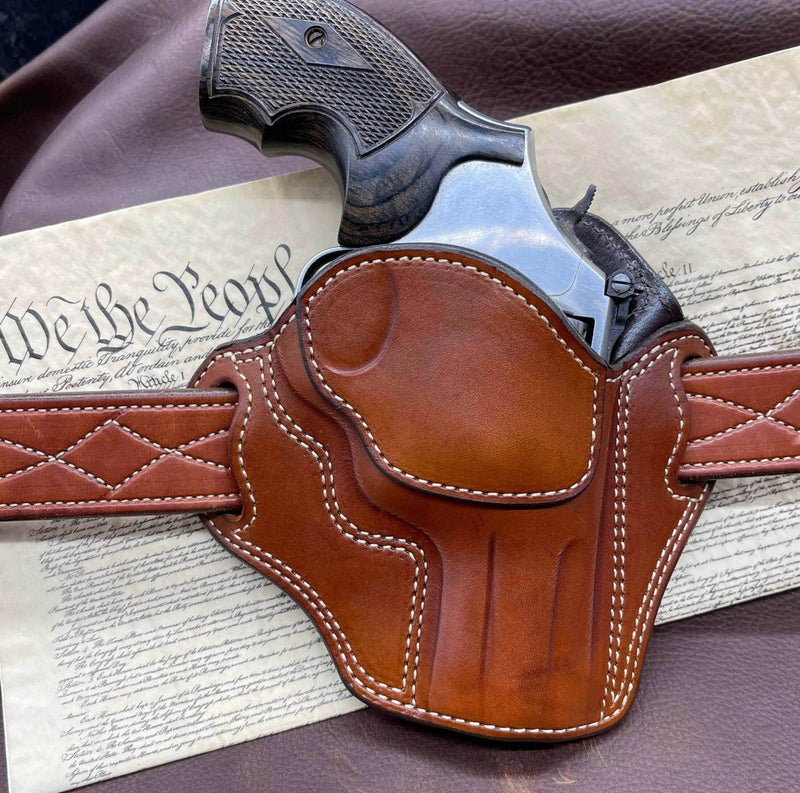
A lever-action rifle wearing a leather sling still looks right to us. So does a revolver in a well-fitted holster or a favorite pocketknife in a sheath that has earned its place on someone’s belt.
There’s history in those combinations, but there’s also present-day usefulness. That’s what makes the tradition worth continuing.
The work happens here
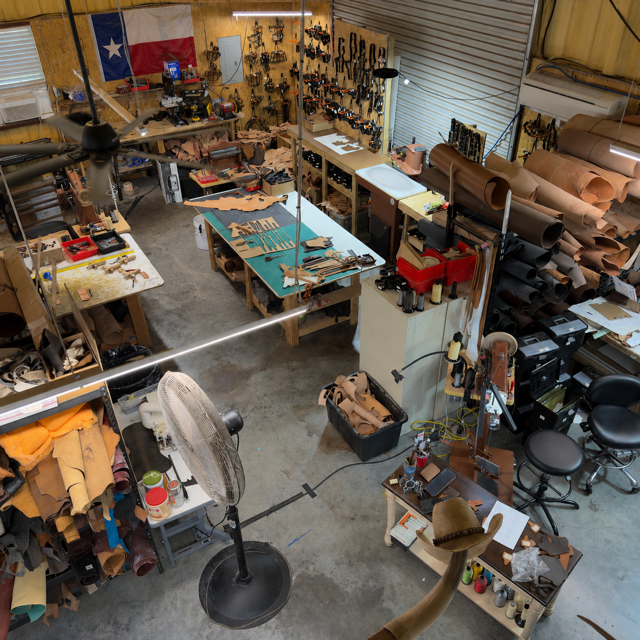
Our shop is in Lone Oak, Texas, in Hunt County, among the communities of Northeast Texas. Greenville, Commerce, Quinlan, Emory, and Sulphur Springs are part of the area we call home.
We’re a small, family-owned business. The leather is cut here, the pieces are built here, and the finishing happens here before an order is packed to leave.
Being a small shop keeps us close to the work. We see the hide before it becomes a holster. We handle the layers before they’re stitched together. We check the finished edges and compare the piece with the order before it ships.
Customers get to ask questions of the people behind the gear. We can explain the leather, help confirm compatibility, and talk through the options available for a particular build.
That connection matters. When you use something regularly, it helps to know where it came from and who stands behind it.
Traditional judgment, working-shop tools
Keeping a craft alive doesn’t mean keeping every tool unchanged.
Our clicker press uses steel cutting dies to produce consistent parts from established patterns. COBRA industrial leather stitchers from Leather Machine Co. handle the substantial leather layers in our builds. Sanding equipment helps prepare edges for the finishing that follows.
The tools support the work. People still make the decisions.
Someone has to inspect the hide and choose where each piece will be cut. Someone has to prepare the lining, guide the stitching, form the leather, and decide whether an edge needs more attention.
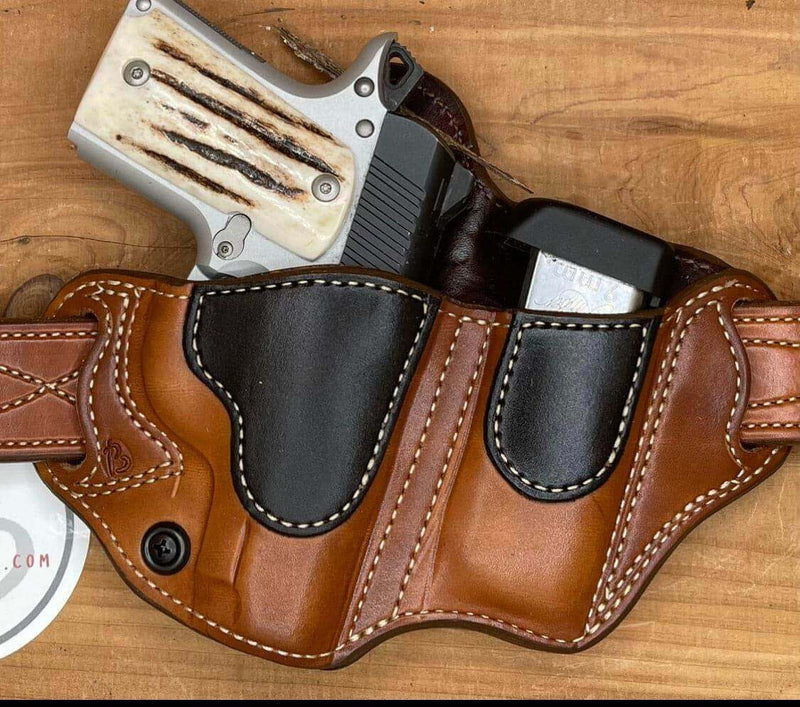
For our molded holsters, we work around firearms we own or molds we have in the shop. The fit begins with the right pattern and continues through the shaping and finishing.
Handmade, in our shop, includes all of that: the equipment, the handwork, and the experience needed to bring them together.
You can follow the process more closely in how a leather holster is made.
Choosing leather for the job
Good leatherwork begins with understanding what the finished piece needs to do.
A holster needs structure and a secure fit. A carry belt needs to support weight without becoming an uncomfortable burden. A rifle sling needs to feel right on the shoulder and suit the firearm it’s carrying.
For our holsters, belts, and sheaths, we work with full-grain, vegetable-tanned Hermann Oak cowhide. It gives us the working qualities those pieces call for, from forming a molded shape to finishing a smooth edge.
We also offer Genuine Water Buffalo on select products. Its distinctive grain and texture bring their own character to the gear.
Choosing the material is only the beginning. The cutting, assembly, stitching, and finishing determine what becomes of it. A good hide deserves careful work all the way through.
Experience shows up in the details
More than 35 years of leathercraft experience goes into what we build.
Much of that experience shows up in decisions a customer may never notice directly: where to place a pattern on the hide, which seam needs to be stitched before assembly, or when a piece needs another pass at the finishing bench.
You notice the results instead. The lining sits cleanly. The parts meet as they should. The edge feels smooth beneath your hand.
Experience also means knowing the limits of a design. Made to order means choosing from the builds and options we offer, with compatibility confirmed before the work begins. It doesn’t mean every change is appropriate for every piece.
Those standards help us produce gear we’re comfortable putting our name on.
Gear becomes personal through use
When a piece leaves the shop, its story with us ends and its story with the customer begins.
A new belt becomes the one worn every morning. A sheath becomes part of getting ready for work. A sling goes along for a first hunt and, with care, many more after it.
Leather develops character along the way. Color deepens, surfaces pick up marks, and the piece becomes recognizable to the person who uses it.
We build with that long service in mind. We also stand behind manufacturer defects for as long as you own the piece, unless it has been altered. If something changes with its fit or condition, we want you to contact us so we can help assess it.
Our leather care guide covers the everyday habits that help keep working leather in good condition.
Carrying the craft forward
For us, continuing American leatherwork means doing the work here and doing it carefully. It means choosing suitable materials, building for a purpose, and taking the finishing seriously.
It also means making gear people still want to use.
That’s how a tradition stays alive: someone learns the craft, puts that knowledge to work, and makes something that earns a place in another person’s day.
If you’d like a piece of that work, shop our in-stock leather gear for finished items that ship within 3–5 business days, or explore our made-to-order collection to see the available builds and options. Check each listing for compatibility and current lead time.
You can also read our story to get to know the shop behind the work.
Here in Lone Oak, the next piece starts the same way—with leather on the table and a job to do.
Leave a comment