Holsters Made in Texas vs. Cheap Imports: What Carries More Securely

Look beyond the flag on the listing
A flag, a western backdrop, and a few words about craftsmanship can make almost any holster look convincing online.
But a photograph won’t tell you how securely it holds your firearm. It won’t show you how the attachment behaves on your belt or how carefully the leather was finished inside.
Those details matter once the holster becomes part of your day.
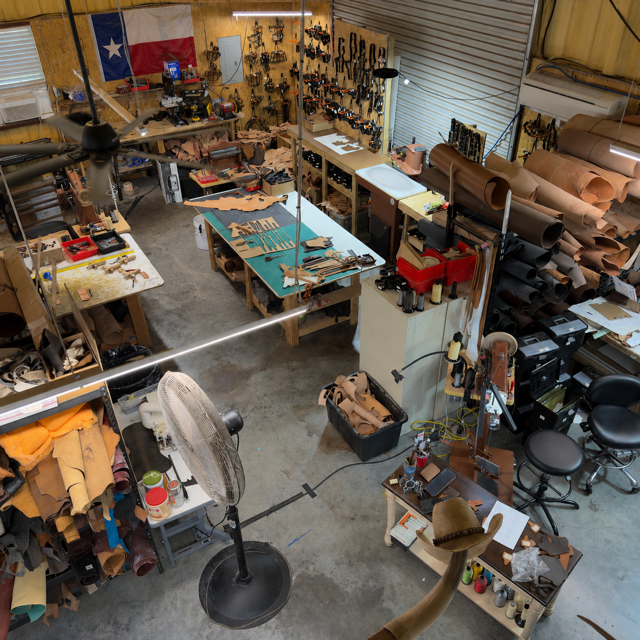
At Busted B Leather, our holsters are cut, lined, stitched, molded, and finished in Lone Oak, Hunt County, Texas. We handle the work here, which means we can explain the materials, construction, and fit behind what we sell.
The location alone doesn’t make a holster secure. The work does. Making it here lets us keep our hands on that work from the first cut to the final inspection.
The fit has to be right before anything else matters
A holster can have beautiful tooling and a flawless finish and still be the wrong choice for your firearm.
Start with compatibility. The make, exact model, barrel length, and configuration all help determine which design fits. An optic, light, rail, or other feature may change the answer.
A listing that says “fits most” deserves a closer look. Some holsters are designed to support several specified models, but a general size description shouldn’t replace clear compatibility information.
The same scrutiny belongs on a handmade holster. “Custom” isn’t proof of fit by itself.
We only make holsters for firearms we own or have the mold for. We do not accept customer firearms for fitting. If your exact model isn’t listed, contact us before ordering so we can confirm availability.
Once the correct design is established, we wet-mold the leather around the firearm or mold we have in the shop. The pattern, shaping, construction, and retention features work together to create the finished fit.
You can see the available designs in our holster lineup.
Secure carry is more than a snug fit
Retention is important, but it’s only part of what a holster needs to do.
The design should properly cover the trigger, hold the supported firearm securely, and remain attached as intended. It should also allow you to establish your grip and remove the firearm without the holster coming along with it.
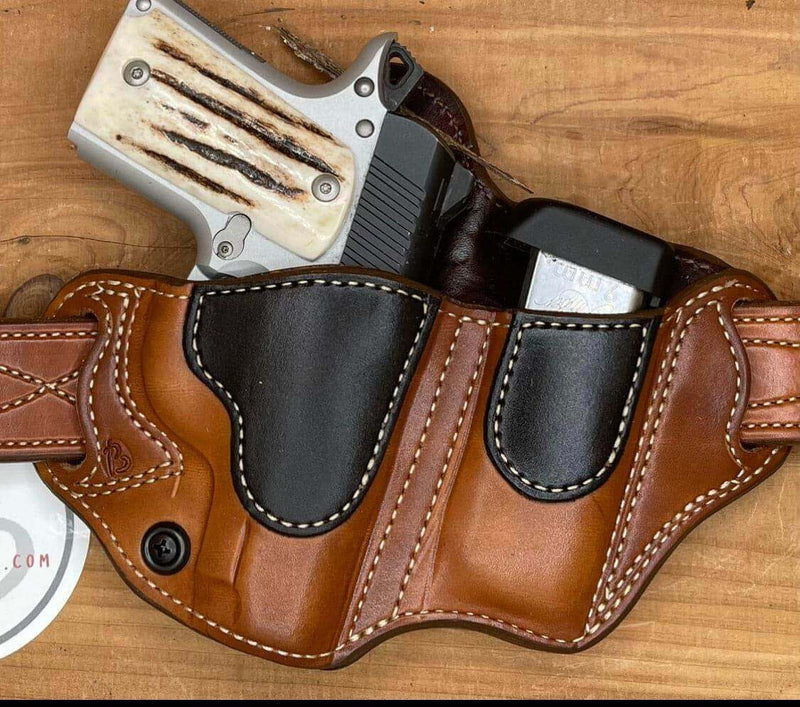
Depending on the model, retention may involve the molded fit, a tension screw, a snap strap, a button stud, or a thumb break. Those options vary by design; they aren’t additions we can automatically put on any holster.
Look at how the complete piece works rather than relying on one claim or test. A holster that feels snug in your hand still needs the correct belt attachment, suitable carry placement, and sound construction.
If something doesn’t fit or function as expected, contact the maker before using it. Qualified instruction can also help you assess and learn your carry setup.
Know what the leather description actually means
The original price difference between two holsters may be easy to see. The material difference can take more explanation.
We use full-grain, vegetable-tanned Hermann Oak cowhide for our holsters. It gives us the structure and working properties we want for forming, stitching, and finishing our designs.
That tells you more than a listing that simply says “leather.”
But “genuine leather” isn’t a universal low-quality grade. The phrase alone doesn’t identify whether a material is full-grain, corrected-grain, or split leather, and it doesn’t tell you how the finished holster was built.
Bonded leather is a different construction: leather fibers or particles combined with a binder to make a composite material. It isn’t what we use for our working holsters.
Ask what the material is and why it suits the job. A clear answer is more useful than assuming every imported piece uses the same leather—or that every American-made piece uses good leather.
Our guide to full-grain, genuine, and bonded leather explains the distinctions.
The less visible work earns its place
Turn a holster over. Look inside it. Follow the seams and run a finger along the edges.
That’s where you begin to see how much attention went into the build.
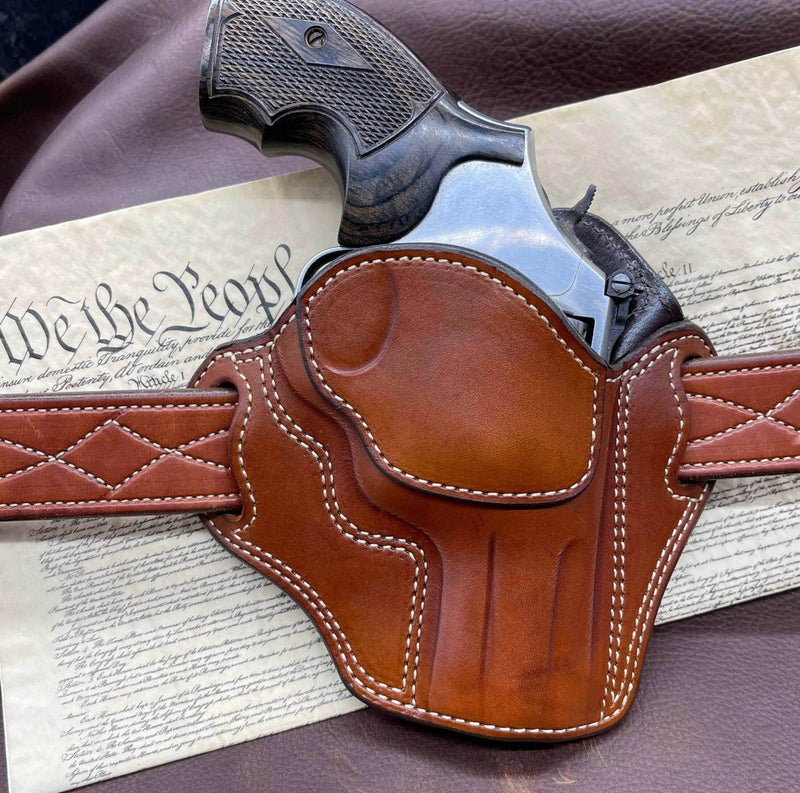
Our holsters have smooth leather lining, carefully joined layers, and edges worked until they feel clean and even. We stitch on COBRA industrial leather stitchers from Leather Machine Co., then finish the seams with backstitching, trimmed and heat-finished thread ends where appropriate, and hammered stitch lines.
The edges are sanded, shaped, burnished, and painted as the design requires.
None of those steps makes a holster indestructible. Together, they contribute to a piece built for regular use and finished with care.
A low price doesn’t prove that every step was skipped. But if the listing gives you no close-up views of the lining, seams, edges, or attachments, ask to see them before buying.
Our holster-making walkthrough shows what happens at our bench.
Give the holster a belt that can support it
Sometimes the holster gets blamed for a problem that starts with the belt.
A belt that rolls or sags can let the holster shift, tip, or move away from where you placed it. Tightening it excessively may add discomfort without giving the setup the support it needs.
A proper leather carry belt helps support the weight and keep the holster stable. Its width and thickness also need to suit the holster’s loops or clips.
That matters for both IWB and OWB carry. The attachments may work differently, but each depends on a stable foundation.
Consider the belt and holster together. Good individual pieces still need to fit and function as a complete setup.
Made here, with someone to talk to afterward
One benefit of buying from our small shop is knowing where to bring your questions.
We can help confirm a listed firearm fit, explain the available options, and talk through the intended carry configuration before you order. After the sale, you can contact us if the piece develops a problem or its fit changes.
We stand behind manufacturer defects for as long as you own the piece, unless it has been altered. Wear, damage, and repair needs are assessed according to the condition of the item.
Leather still needs care. Keep the interior free of grit, let damp leather dry naturally, and inspect stitching and attachments regularly. Before soaking, stretching, or applying a treatment to a molded holster, ask us. Our leather care guide covers routine maintenance.
More than 35 years of leathercraft experience goes into what we build. The service behind it matters just as much as the package that arrives.
Choose the work you’ll trust on your belt
Whether you’re considering a Texas-made holster or one made elsewhere, ask the same questions.
Does it fit your exact firearm? Is the trigger properly covered? How does it retain the firearm and attach to the belt? What leather is being used? Can you see the construction, and can the maker explain it?
Those answers tell you more about secure carry than a flag or a bargain price.
Our Sidewinder holsters for Bond Arms, Texas Bodyguard holsters, cross-draws, and other designs give you different ways to carry, with compatibility and options shown in each listing.
Shop our in-stock holsters for finished pieces that ship within 3–5 business days, or browse our made-to-order holsters to choose from the available builds. Check the listing for fit, handedness, carry configuration, and current lead time.
If you’re unsure where to start, contact us with your exact firearm model and how you prefer to carry.
We’re proud to make holsters in Texas. The reason to wear one is the fit, workmanship, and care we put into it here.
Leave a comment